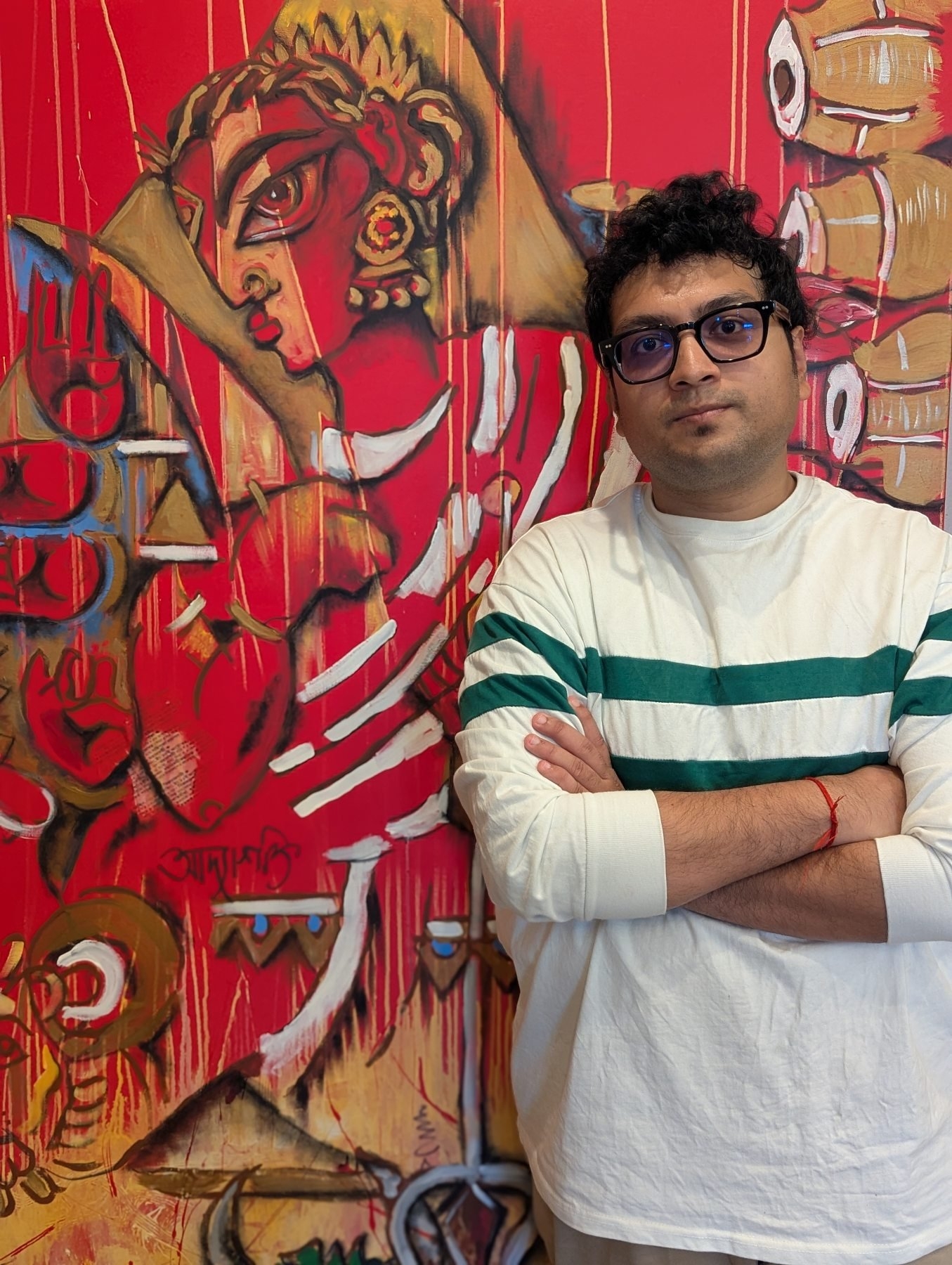
I am a PhD student in the Department of Computer Science at Arizona State University and Graduate Student Assistant in the ShaDE Lab (advised by Dr. Ariane Middel).
My research sits at the intersection of geospatial machine learning (GeoAI), urban informatics, and remote sensing, with the goal of enabling more climate-resilient and equitable urban planning. I build end-to-end mapping pipelines that fuse imagery (e.g., NAIP), LiDAR, and open geospatial data to create actionable layers such as pedestrian infrastructure networks and city-scale tree inventories. Using statistical, spatial, and AI-driven models, I quantify extreme-heat exposure and evaluate how vegetation structure and shade influence pedestrian comfort and neighborhood-scale inequities. More broadly, I enjoy translating core machine learning ideas into scalable, real-world systems that produce tangible decision-support tools for cities.
I have received my B.Sc (Engg.) in Computer Science and Engineering from Bangladesh University of Engineering and Technology(BUET). I completed my undergraduate thesis under the supervision of Professor Dr. Md. Saidur Rahman on Graph Theory and Algorithms.
Warning
Problem: The current name of your GitHub Pages repository ("Solution: Please consider renaming the repository to "
http://".
However, if the current repository name is intended, you can ignore this message by removing "{% include widgets/debug_repo_name.html %}" in index.html.
Action required
Problem: The current root path of this site is "baseurl ("_config.yml.
Solution: Please set the
baseurl in _config.yml to "Phoenix Walkability Weather Risk

Because a sidewalk is only useful when the climate allows people to walk. This live tracker reports feels-like temperature (heat + humidity + sun + wind) and classifies conditions into walkability risk tiers.
Education
-
 Arizona State UniversityDepartment of Computer Science
Ph.D. Student2022 - present -
Arizona State UniversityM.S. in Computer Science2025
-
 Bangladesh University of Engineering and TechnologyB.Sc. in Computer Science and Engineering2021
Experience
-
DLC ResourcesGIS Tech Research InternSummer 2026
-
Graduate Student AssistantArizona State UniversityAug 2022 - Present
-
ConsultantStart NetworkMar 2022 - Jul 2022
-
Software EngineerChaldal EngineeringMar 2021 - Feb 2022
News
Selected Publications (view all )
From Hubs to Deserts: Urban Cultural Accessibility Patterns with Explainable AI
Protik Bose Pranto, Minhazul Islam, Ripon Kumar Saha, Abimelec Mercado Rivera, Namig Abbasov
Urban AI (ACM SIGSPATIAL 2025) 2025 Paper
Cultural infrastructures, such as libraries, museums, theaters, and galleries, support learning, civic life, health, and local economies, yet access is uneven across cities. We present a novel, scalable, and open-data framework to measure spatial equity in cultural access. We map cultural infrastructures and compute a metric called Cultural Infrastructure Accessibility Score (CIAS) using exponential distance decay at fine spatial resolution, then aggregate the score per capita and integrate socio-demographic indicators. Interpretable tree-ensemble models with SHapley Additive exPlanation (SHAP) are used to explain associations between accessibility, income, density, and tract-level racial/ethnic composition.
From Hubs to Deserts: Urban Cultural Accessibility Patterns with Explainable AI
Protik Bose Pranto, Minhazul Islam, Ripon Kumar Saha, Abimelec Mercado Rivera, Namig Abbasov
Urban AI (ACM SIGSPATIAL 2025) 2025 Paper
Cultural infrastructures, such as libraries, museums, theaters, and galleries, support learning, civic life, health, and local economies, yet access is uneven across cities. We present a novel, scalable, and open-data framework to measure spatial equity in cultural access. We map cultural infrastructures and compute a metric called Cultural Infrastructure Accessibility Score (CIAS) using exponential distance decay at fine spatial resolution, then aggregate the score per capita and integrate socio-demographic indicators. Interpretable tree-ensemble models with SHapley Additive exPlanation (SHAP) are used to explain associations between accessibility, income, density, and tract-level racial/ethnic composition.